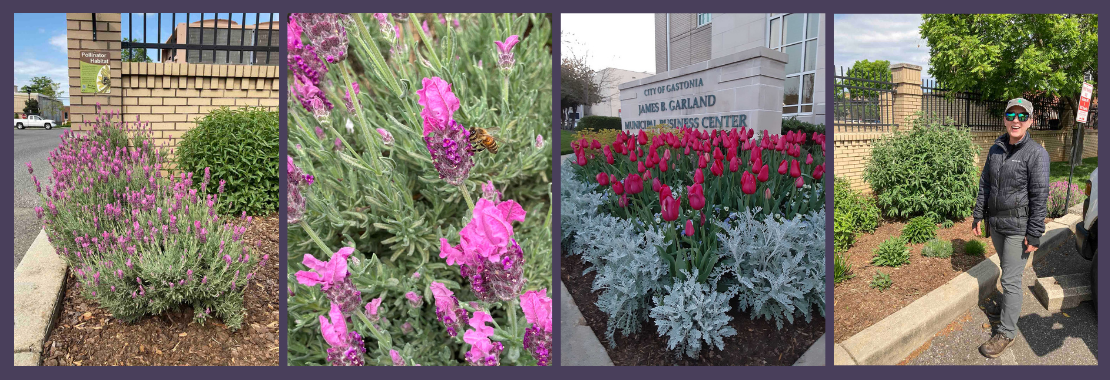
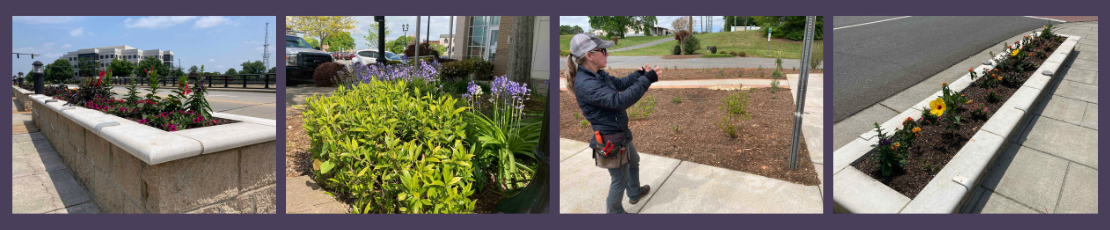
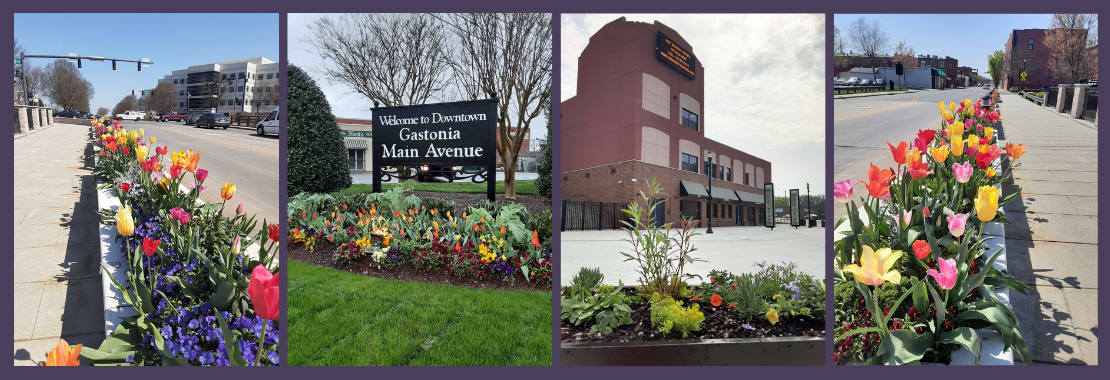
It’s tempting to let the photos do all of the talking in this story: Pictures of colorful tulips against a blue spring sky. Reds, yellows and greens bursting to life in huge planters at FUSE. Pollinators making a beeline for specially designed gardens on City properties.
The amazing photos do speak for themselves. This article is about the person, philosophy and passion of the City’s first horticulturist, Heather Stephens. “Gastonia is on the cutting edge, and I am thrilled to be part of Gastonia and its future,” she says.
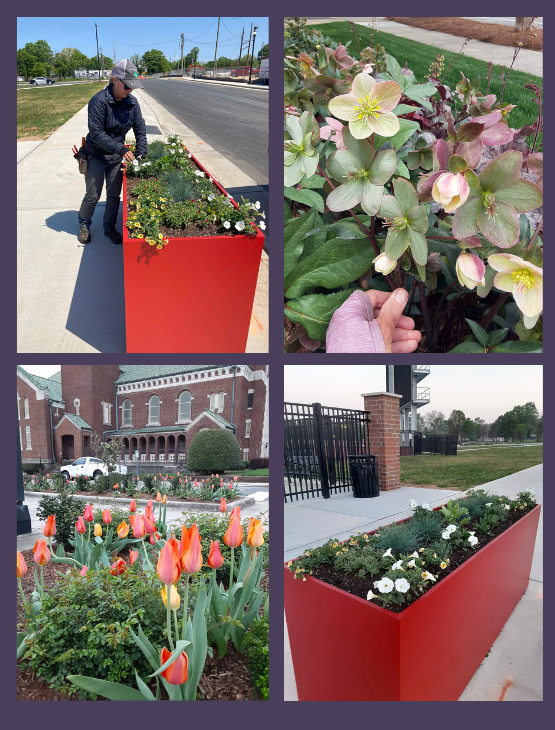
Stephens describes herself as a “working horticulturist.” She designs what will go in the beds and containers, deciding which plants to use and where they should go. She also buys the plants, puts them in the ground, prunes trees and shrubs, and pulls weeds.
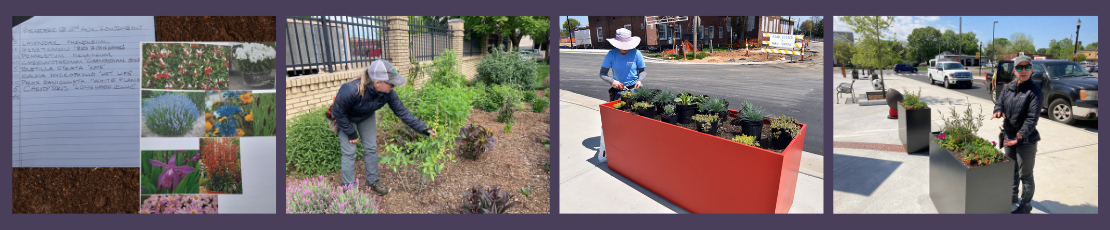
Something else Stephens does for those picture-perfect beds: She enriches the soil. “The first thing I tackled was improving the soil and using really good soil amendments,” she says. “With all of these beds, my goal was to make the soil alive with beneficial fungi, compost and earthworms.” Worn out or sandy soil was replaced with fertile loam that will help her designs thrive.

Stephens started with the City two years ago as a Landscape Tech in Parks and Recreation. It was part of a City plan to expand its horticultural efforts and, in Stephens’ words, “make Downtown spectacular.” Earlier this year, she was given the new job title.
 “Heather has a vast knowledge of flowering plants and has made a huge difference in Downtown and other areas,” says Parks Department Assistant Director Tripp White. “The job she has done has earned her the horticulturalist position and she is a great asset to the City.”
Stephens has worked in horticulture for about 25 years. Her experience includes working in wholesale and retail settings, in the City of Charlotte’s arborist’s office, for a private company that did landscaping beds and containers, and as lead horticulturist at Daniel Stowe Botanical Garden before coming to the City of Gastonia.
She is responsible for about 20 garden beds on City properties. She creates a design for which plants go in each bed, then maintains the plants. She also does the design-and-plant in about a dozen containers, such as bigger-than-a-bathtub red planters at CaroMont Health Park. Those showstopping containers and garden beds around Gastonia feature a delightful mix of plant colors, textures and sizes.
In addition to selecting plants known to do well in a certain location, such as sun-loving or shade-craving, Stephens wants them to be fuss-free and look good throughout the growing season. “I try to think about plants that are going to survive. Really tough ones that I can walk away from,” she says.
And she does what’s called succession planting. When designing a bed, she selects plants that look good at different times. “I know that this one is going to look really good in May,” she explains. “But it’s going to fade a bit into July. So I need something else to come up more vigorously.” So in mid-summer, she’ll cut back the May bloomer and let a different plant take center stage during the hottest weeks. Her designs include a series of ebb-and-flow successions that continue into October. 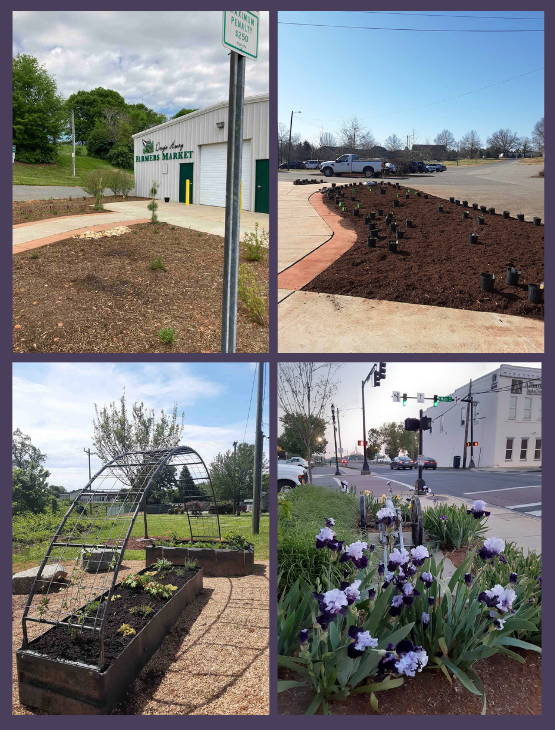
Earlier this year, she was busy with a major renovation outside of the Farmers Market. A tangle of overgrown bushes and lifeless soil was removed, the drainage system was improved, and the bed is now specially designed to attract pollinators that fertilize many flowers and vegetables. She enthusiastically describes what she has planted: an elegant trumpet vine, a Lady Baltimore hibiscus that she calls “extravagant,” the Grand Cascade butterfly bush with its “massive” 3-foot flower heads, and the 8-foot-tall bog salvia, which Stephens says is the best pollinator plant she’s ever worked with. She says the finished garden will be “pretty outrageous.”
A smaller pollinator garden at the Garland Center is also flourishing under Stephens’ nurturing care. She says bees from hives at the Rotary Community Garden on East Franklin Boulevard are buzzing a triangular route to the Garland Center garden, then to the flowers on the Dr. Martin Luther King Way bridge, and on to the new pollinator garden at the Farmers Market. “I really do appreciate the pollinator gardens,” she says. “The plants come back year after year, and you’re not spending so much effort and money.”
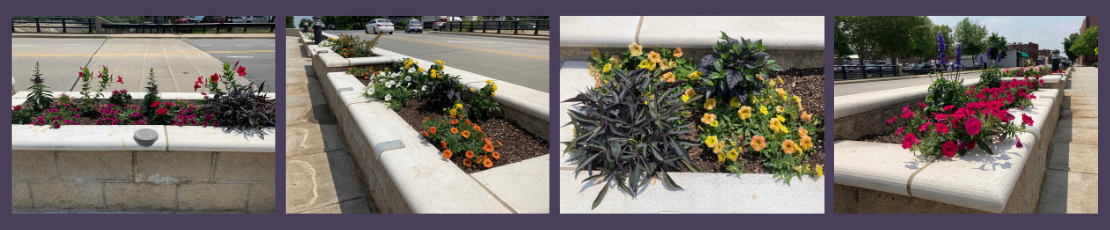
Those flowerboxes on the Dr. Martin Luther King Way bridge are another of her impressive projects. This summer, she’s created a rainbow of color with a red section, then pink, then yellow, then orange. Her supervisor is impressed. “One area that shows Heather’s work the best is the bridge on MLK,” White says. “Wow!”
Downtown business owner Jim Morasso also praises Stephens’ handiwork and the City’s decision to hire a horticulturist. “A walkable downtown needs pockets of beauty, areas that make you ponder the moment and an opportunity to smell the roses,” Morasso says. He adds that the City’s emphasis on plant-based beauty will “continue to inspire our residents and visitors to return to a city full of life and pride.”
Stephens says her goal is to bring beauty and smiles into people’s busy worlds. “My main goal is to stop you for a second. Just to appreciate one flower,” she says. “When I see a flower and look at the beautiful creation of it, it’s stunning. The intricacy of something so complicated. Just to stop and look at it and admire it. That’s what I really want.”